NACS vs CCS: Which EV Charging Plug Do You Actually Need?
NACS has won the plug war, but CCS isn't going anywhere yet. What each connector means for Supercharger access, adapters, home charging, and used-EV shopping.
If you're shopping for an EV right now, here's the plug situation in one paragraph: NACS (the North American Charging Standard, the compact connector Tesla developed, now standardized as SAE J3400) has won. Nearly every major automaker selling in the US has committed to it, new models are shipping with native NACS ports, and the rest of the fleet connects to NACS chargers — including Tesla Superchargers — through adapters. CCS (the Combined Charging System) is the plug most non-Tesla EVs built through the mid-2020s carry, and it isn't going away for years: CCS stations remain everywhere, and adapters bridge both directions.
So the practical answer to "which plug do you actually need?" is: whichever your car comes with, plus one inexpensive adapter. There is no wrong choice that locks you out of charging. But the details — which adapter, which networks you can reach, what changes for used-EV buyers — matter enough to affect which car you buy and what you pay for public charging.
This guide explains NACS vs CCS plainly: what each connector is, why the industry switched, exactly what you need depending on the car you're considering, and how the transition affects home charging, road trips, and used-EV shopping. For what charging will cost you either way, see our charging cost calculator.
What is CCS? The old default for non-Tesla EVs
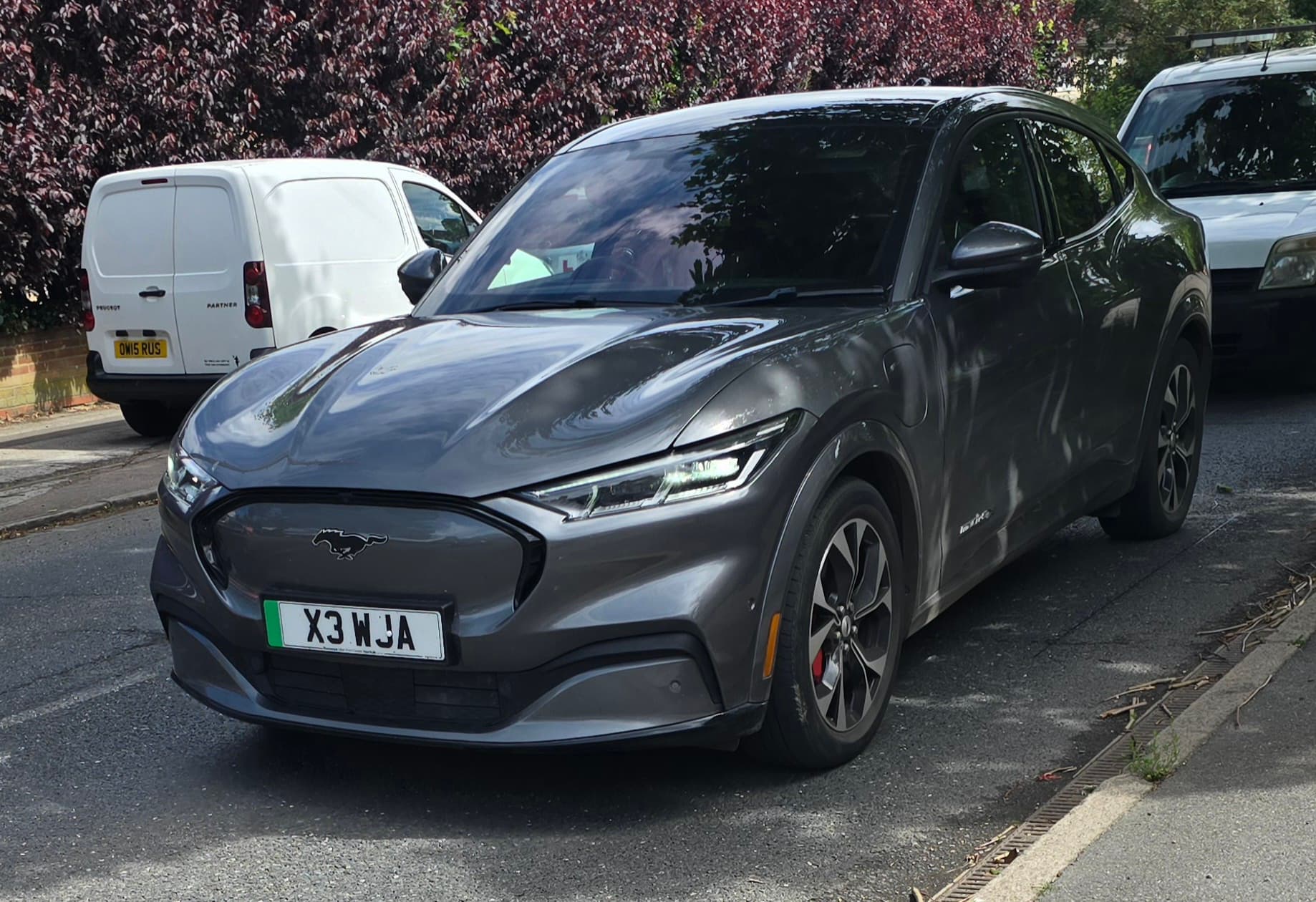
CCS (Combined Charging System, specifically "CCS1" in North America) has been the standard plug on almost every non-Tesla EV sold in the US through the mid-2020s — the Hyundai Ioniq 5, Ford Mustang Mach-E, Volkswagen ID.4, Chevrolet Bolt EV era of vehicles. It "combines" two things in one port: the round J1772 section on top handles Level 1 and Level 2 AC charging, and two large DC pins below handle fast charging. That's why a CCS car uses a J1772 plug at home and the full combo plug at a fast charger.
CCS works fine electrically — it supports very high charging speeds — but it's bulky, the cables are heavy, and the CCS fast-charging networks built around it earned a patchier reliability reputation than Tesla's. None of that made CCS fail; what changed the game was access to the Supercharger network.
What is NACS? Tesla's plug becomes everyone's plug
NACS is the connector Tesla has used on its cars and Superchargers all along: one compact plug that handles both AC and DC charging through the same pins, about half the size of CCS with lighter, easier-to-handle cables. In 2022 Tesla opened the design for industry use and renamed it the North American Charging Standard; SAE International then standardized it as J3400, making it a true industry standard rather than one company's property.
Starting with Ford and GM in 2023, essentially every major automaker — Hyundai, Kia, Honda, Toyota, BMW, Mercedes-Benz, Volkswagen, Volvo, Polestar, Nissan, Rivian, Lucid, Subaru, and more — announced the switch. The motivations were straightforward: Superchargers are the largest, most reliable fast-charging network in North America, drivers wanted access, and one standard connector simplifies everything. New models have been arriving with native NACS ports since 2025, with the changeover rolling through each brand's lineup over several model years.
NACS vs CCS: quick comparison
| Feature | NACS (SAE J3400) | CCS1 |
|---|---|---|
| Size and handling | Compact, light cable | Bulky, heavy cable |
| AC and DC charging | Same slim plug for both | J1772 top for AC + added DC pins |
| Supercharger access | Native | Via approved NACS adapter, where the brand has access |
| Found on | Teslas; new models from most brands (2025 onward) | Most non-Tesla EVs built through ~2024-2025 |
| Future outlook | The North American standard going forward | Supported for years via existing stations and adapters |
Which plug do you actually need? It depends on the car you buy
If you buy a Tesla
Nothing to think about. Native NACS, full Supercharger access, and a CCS adapter exists if you ever want to use CCS fast chargers. Home charging works with the included/available NACS mobile connector or any J1772 charger via the simple adapter Tesla ships.
If you buy a new EV with a native NACS port
You get Supercharger access out of the box, which is the best road-trip charging in the country. You'll likely want one adapter — NACS-to-CCS — so you can also use the huge installed base of CCS fast chargers (Electrify America, EVgo, and others) while they add NACS connectors. For home charging, a J1772-to-NACS adapter (often included with the car) makes every existing home and public Level 2 charger usable.
If you buy a new or used EV with a CCS port
This describes most used EVs and some remaining new inventory — and it's completely fine. You charge everywhere CCS works today, and one CCS-to-NACS adapter (roughly in the $50-$250 range depending on source, automaker-approved versions often supplied free or sold by your brand) opens Supercharger access if your brand has been granted it. That last clause matters: Supercharger access rolled out brand by brand, covers most major automakers now, and generally works only at newer (V3+) Supercharger stalls. Verify your specific model's status in the Tesla app before counting on it.
Safety note: buy only automaker-approved or reputably certified adapters. A DC fast-charging adapter carries enormous power; bargain-bin units are not the place to save money.
If you're buying used
A CCS port should not scare you off a good used EV — prices on used EVs are attractive, the federal used-EV credit has been worth up to $4,000 for qualifying purchases, and an adapter solves the network question for most brands. Just budget for the adapter, confirm Supercharger eligibility for that model, and factor it into negotiations. Our rebate finder shows which incentives apply in your ZIP code, and the comparison tool helps you weigh a used CCS car against a new NACS one.
What NACS vs CCS means for home charging
Almost nothing — and that's the good news. Home charging is AC, where the stakes are lower and adapters are simple and cheap. Existing home chargers with J1772 connectors work with NACS cars via a small adapter; new home chargers increasingly come with NACS connectors and work with CCS/J1772 cars the same way. If you're installing home charging today, either connector version is a fine purchase — pick the one matching your current car and know a $50-and-up adapter covers your next one. Full install details and costs are in our home charging setup guide, and the charging calculator shows what those home kilowatt-hours will cost in your area.
What it means for road trips and public charging
The transition's real-world effect is overwhelmingly positive: more compatible chargers for everyone. A NACS-equipped car with a CCS adapter — or a CCS car with a NACS adapter — can use effectively every major fast-charging network in the country: Superchargers, Electrify America, EVgo, ChargePoint's DC sites, and new all-comers networks like Ionna that install both connectors on the same station. Meanwhile CCS networks are adding NACS cables to existing posts.
During the transition years, two practical habits help:
- Carry your adapter in the car, always. The best charger on a given day might be either connector type.
- Filter by connector in your planning app. PlugShare and in-car navigation let you filter stations by NACS or CCS (and by adapter compatibility), which removes guesswork on unfamiliar routes.
One more wrinkle worth knowing: cable reach. Some Supercharger stalls were designed for Tesla's rear-driver-side port placement, so a non-Tesla with a differently placed port occasionally parks awkwardly or occupies an adjacent stall. Newer stations use longer cables, and etiquette plus site design are catching up.
Will CCS chargers disappear?
Not for many years. There are many thousands of CCS fast-charging ports in the ground, millions of CCS vehicles on the road, and networks have every incentive to serve them — typically by adding NACS cables alongside CCS rather than ripping anything out. Think of it like the long coexistence of old and new phone connectors: the direction is clear, but the installed base keeps working. A CCS car bought today should expect solid public charging support well past the length of a typical ownership period.
FAQ
Is NACS better than CCS?
Functionally they both charge cars at high speeds; NACS won on ergonomics (smaller plug, lighter cable), on the reliability reputation of the network built around it, and on industry momentum. For a buyer, "better" mostly means NACS is the standard the market has chosen going forward.
Can a CCS car use Tesla Superchargers?
Usually yes, with two conditions: your car's brand must have been granted Supercharger access (most major brands have), and you need an approved CCS-to-NACS adapter. Access applies at newer Supercharger stalls; the Tesla app shows compatible sites.
Do I need a new home charger for a NACS car?
No. A J1772 home charger works with any NACS car through a simple AC adapter, and vice versa. Buy a new charger only if you want one — and if so, either connector version works with an adapter covering the other.
Should I avoid buying a used CCS-port EV now?
No. CCS charging infrastructure remains extensive, adapters unlock Superchargers for most brands, and used CCS EVs are often excellent value — especially with used-EV incentives factored in via our rebate finder. Just confirm adapter and Supercharger eligibility for the specific model.
Are NACS and J3400 the same thing?
Yes. NACS is the common name for the connector Tesla opened to the industry; SAE J3400 is its formal standard designation. Carmakers and networks use the terms interchangeably.
Bottom line
NACS is the future of EV charging plugs in North America, CCS is the present for millions of cars, and adapters make the difference between them a minor accessory purchase rather than a buying constraint. Buy the car that fits your life, get the approved adapter for the other connector, keep it in the trunk, and you'll have access to essentially every public charger in the country. Then let the economics work for you: whatever the plug shape, home charging remains the cheap default — see your numbers in the charging calculator and browse NACS- and CCS-equipped models alike at our vehicle pages.