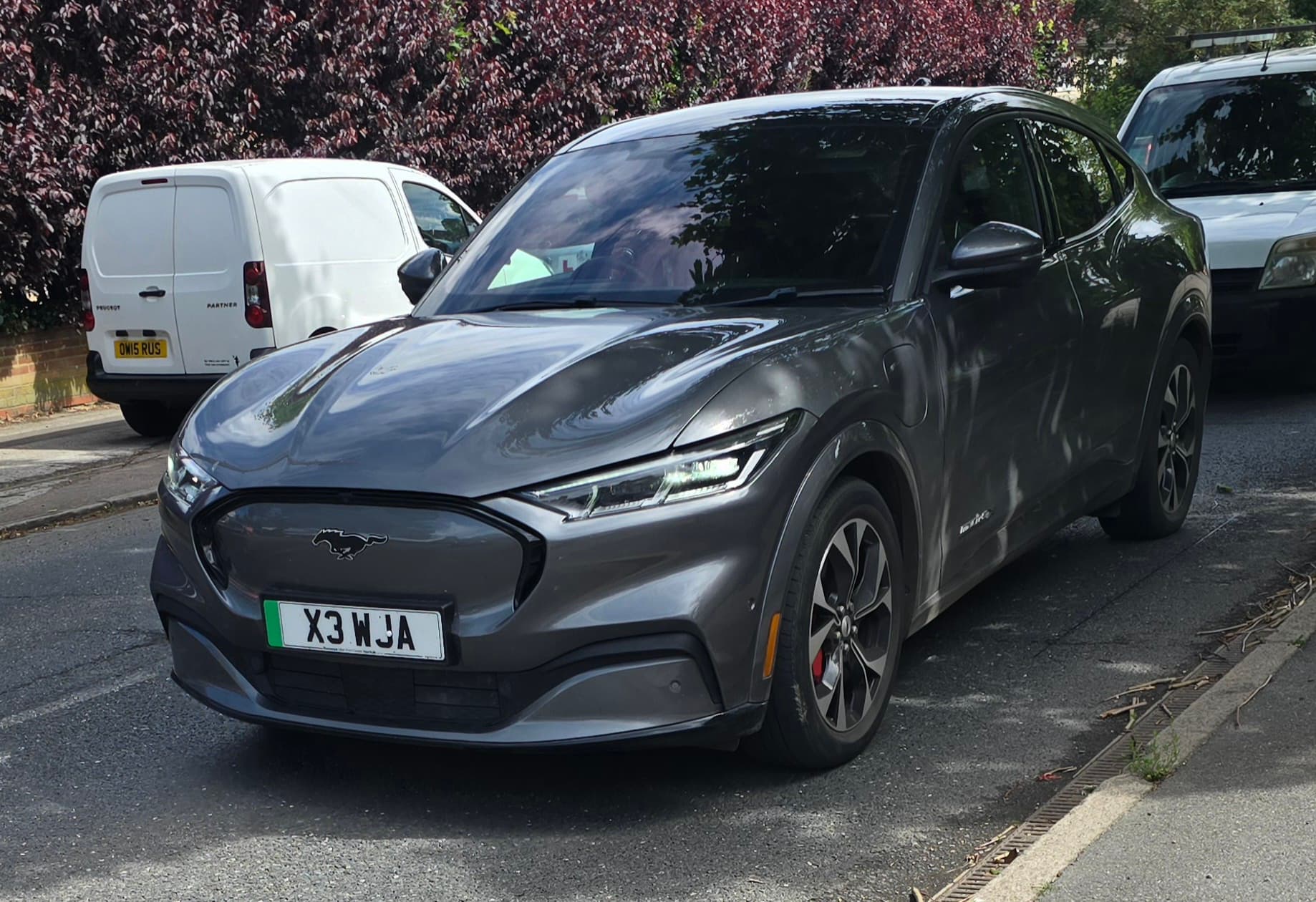
Ford's EVs Compared: Mustang Mach-E vs. F-150 Lightning — Every Trim, Battery and Price
Every 2026 Mustang Mach-E and F-150 Lightning trim compared: prices, EPA ranges, battery options, NACS adapter status, and the Lightning production pause.
Ford sells exactly two retail EVs in the United States right now: the Mustang Mach-E crossover and the F-150 Lightning pickup, plus the commercial-focused E-Transit van. On paper that makes for a short lineup, but the trim sheets tell a more complicated story: two battery sizes, rear- and all-wheel drive, a price spread from under $38,000 to roughly $85,000, and — as of mid-2026 — one of the two vehicles isn't actually being built. Here is every current US trim, what it costs, how far it goes, and where the smart money lands.
One housekeeping note before the tables: the federal EV purchase tax credit ended on September 30, 2025. Neither of these vehicles — nor any other new EV — qualifies for a federal purchase credit today. Ford responded by cutting sticker prices on several trims for 2026, which is reflected in the numbers below. All prices are MSRP before destination charges (about $2,045 on the Mach-E and $2,595 on the Lightning) unless noted, and state or utility incentives may still apply where you live.
2026 Mustang Mach-E: Every Trim and Price
The Mach-E enters 2026 with four trims: Select, Premium, GT, and the rally-inspired Rally. Select and Premium can be had with rear-wheel drive (RWD) or all-wheel drive (AWD) and with either the standard-range or extended-range battery, while GT and Rally are AWD-only with the extended-range pack standard.
| Trim | Drivetrain | Battery | EPA Range | Starting MSRP |
|---|---|---|---|---|
| Select | RWD | Standard (73 kWh usable) | 260 miles | $37,795 |
| Select | AWD | Standard (73 kWh usable) | 240 miles | $40,795 |
| Premium | RWD | Standard (73 kWh usable) | 260 miles | $40,595 |
| Premium | AWD | Standard (73 kWh usable) | 240 miles | $43,595 |
| Premium | RWD | Extended (88 kWh usable) | 320 miles | ~$45,600 (option) |
| Premium | AWD | Extended (88 kWh usable) | 300 miles | ~$48,600 (option) |
| GT | AWD | Extended (88 kWh usable) | 280 miles | $53,395 |
| Rally | AWD | Extended (88 kWh usable) | 265 miles | $59,735 |
Sources: pricing and range figures from Ford and EPA estimates as reported by Edmunds and CarsDirect for the 2026 model year. The extended-range battery is roughly a $5,000 upgrade where offered, and AWD adds $3,000 on Select and Premium (CarsDirect). The GT's optional Performance upgrade bumps torque to 700 lb-ft and, somewhat counterintuitively, carries a slightly higher 290-mile EPA rating thanks to different equipment.
Standard vs. Extended Range: Which Battery Makes Sense?
The Mach-E's two packs work out to about 73 kWh usable for the standard-range battery and 88 kWh usable for the extended-range battery (Ford). The practical differences:
- Range: 260 vs. 320 miles in RWD form (EPA) — a 60-mile gap that matters most for road-trippers and cold-climate drivers, who should mentally discount any EPA number by 20-30 percent in winter.
- Power: the extended pack also raises output — 264 hp vs. 290 hp in RWD trim, and 325 hp vs. 370 hp with AWD (Ford).
- Cost: at roughly $5,000, the bigger pack costs about $83 per additional mile of range. If you mostly charge at home and drive under 60 miles a day, that money is better left in your pocket.
DC fast charging is unchanged for 2026: a 10-80 percent session takes about 35 minutes under ideal conditions (Ford), which trails newer 800-volt rivals. Use our charging calculator to see what that means for your actual routes.
Mach-E Value Picks
- Best overall value: Select RWD ($37,795). After Ford's post-credit price cuts, this is one of the cheapest ways into a 260-mile, well-sorted electric crossover from a mainstream brand. It undercuts a base Tesla Model Y by a wide margin — see our Mach-E vs. Model Y comparison for the full head-to-head.
- Best road-trip build: Premium RWD with the extended-range battery. 320 miles (EPA) is the lineup's maximum, and Premium adds the equipment most buyers actually want.
- Skip unless you know why you want it: Rally. It's genuinely fun — 480 hp, rally-tuned suspension, extra ground clearance — but at $59,735 with a 265-mile rating, it's a toy, not a value play.
2026 F-150 Lightning: Every Trim and Price
The Lightning's 2026 trim walk changed meaningfully. The XLT is gone, replaced by a new STX trim at the same $63,345 price point, and Ford cut prices on Flash (down $4,000) and Lariat (down $2,000) after the federal credit expired (Ford Authority). The bigger news is under the floor: the 123-kWh (usable) extended-range battery is now standard on Pro, STX, and Flash rather than a five-figure option, which transforms the value math on the lower trims.
| Trim | Battery | EPA Range | Starting MSRP | Notes |
|---|---|---|---|---|
| Pro | Extended (123 kWh) | Up to 320 miles | $54,780 | Work-truck spec; heavily fleet-allocated |
| STX | Extended (123 kWh) | 290 miles | $63,345 | New for 2026; replaces XLT |
| Flash | Extended (123 kWh) | 320 miles | $65,995 | Tech-focused; $4,000 cheaper than 2025 |
| Lariat | Extended (123 kWh) | 320 miles | $74,995 | Leather, premium audio; $2,000 cheaper than 2025 |
| Platinum | Extended (123 kWh) | 300 miles | $84,995 | Max luxury; 22-inch wheels cost it range |
Sources: Ford pricing as reported by Ford Authority, Electrek, and Cars.com; EPA range estimates per trim from Electrek and Cars.com. All Lightnings are dual-motor 4WD SuperCrews; the extended-range powertrain is rated at 580 hp and 775 lb-ft (Ford). Properly equipped with the Max Trailer Tow package, the Lightning tows up to 10,000 pounds (Ford) — but expect real-world range to drop by roughly half when towing anything with the aerodynamics of a box.
The Elephant in the Room: Production Is Paused
Honesty requires a caveat here: as of this writing (July 2026), the F-150 Lightning is not being built. Ford paused production at the Rouge Electric Vehicle Center in late 2025 after a fire at Novelis's Oswego, New York aluminum plant choked the supply chain, and the company chose to prioritize scarce aluminum for its high-volume gas and hybrid F-150s. Novelis restarted the Oswego plant in June 2026, but neither company has committed to a date for Lightning production to resume, and Ford has said it intends to add more than 50,000 gas-truck units in 2026 first.
What this means for shoppers, practically:
- Inventory is thin and uneven. New Lightnings on dealer lots are 2025s and early-build 2026s. Popular configurations (especially Flash) exist, but you may need to search a wide radius. Time-on-lot data suggests dealers are motivated — Edmunds pegged Lightning days-to-turn at several times the market average.
- Negotiate. A paused product with aging inventory and no tax credit is a buyer's-leverage situation, and Ford's official price cuts set the ceiling, not the floor.
- Warranty and support are unaffected. A pause is not a cancellation; Ford continues to state the Lightning remains part of its lineup, and parts and service are unaffected.
Lightning Value Picks
- Best value: Flash ($65,995). After its $4,000 cut, Flash bundles the 320-mile battery, the bigger screen, and the most-wanted tech at a price only $2,650 above the more basic STX.
- Best for work: Pro ($54,780) — if you can find one. Retail allocation is minimal, but the 2026 Pro with the extended battery standard is the cheapest 300-mile-plus electric truck from a full-line manufacturer.
- Think twice: Platinum. $85k buys real luxury, but its 300-mile rating trails the $20,000-cheaper Flash, mostly because of wheel choice.
Charging and the Tesla Supercharger Question
Both the 2026 Mach-E and Lightning still use a CCS charge port — Ford's first native-NACS (Tesla-style port) EVs are coming on its next-generation models, starting with the upcoming midsize pickup (Ford Authority). Current owners access Tesla Superchargers with Ford's Fast Charging Adapter. The important status update: Ford's free-adapter program has ended, and the adapter now sells for about $200 through Ford's accessory store. With the adapter, Ford drivers can use 29,000-plus NACS Supercharger stalls in the US and Canada (Ford), which meaningfully de-stresses road trips even with the Mach-E's middling 150-kW peak charge rate.
Mach-E or Lightning: Which Ford EV Fits?
- Commuting, families, cost-conscious buyers: Mach-E, and it isn't close. A Select RWD costs $17,000 less than the cheapest retail Lightning, is far more efficient, and is actually in production.
- Towing, hauling, job sites, home-backup power: Lightning. Its 9.6-kW Pro Power Onboard outlets and available home backup integration remain unique selling points the Mach-E can't answer.
- Road-trip-heavy households: the extended-range Mach-E Premium RWD (320 miles) or Lightning Flash (320 miles) are the range picks — but the Mach-E's smaller frontal area makes its miles cheaper and its charging stops shorter in practice.
A Word for Business Buyers: E-Transit
Ford's third EV, the E-Transit, isn't really a consumer product but deserves a mention if you run a business. The 2026 E-Transit cargo van starts at $55,655 (TrueCar) with an 89-kWh battery, 266 hp, and an EPA-estimated 159 miles of range — modest on paper, but sized for urban delivery duty cycles where vans return to a depot nightly. It comes in three roof heights and two lengths with up to 487 cubic feet of cargo volume, plus chassis-cab and cutaway versions (Ford). For last-mile fleets, the total-cost-of-ownership math often works even without the departed federal credit.
Bottom Line
Ford's 2026 EV story is one of sharpened pricing and awkward timing. The Mach-E Select RWD at $37,795 is a legitimately strong value in the post-tax-credit market, and the extended-range Premium is one of the better 320-mile crossovers under $50k. The Lightning is a more complicated buy: the product is better and cheaper than ever — extended battery standard, Flash at $65,995 — but the production pause means you're shopping existing inventory, which cuts both ways: less choice, more leverage.
If you want to see how these trucks and crossovers stack up against everything else on the market, plug your numbers into EV Decoder's charging calculator, browse current inventory-clearing offers on our deals page, or answer a few questions in Find My EV to get a shortlist matched to your driving, your budget, and your climate.